
Why Writing Is the Best Tool for Personal Growth
为什么写作是个人成长的最佳工具
Writing is wonderful. Thanks to the generation effect, it helps you better remember what you read – even if it’s just by taking notes – and it’s good for your mental health. Building a writing habit is one of the most powerful things you can do for yourself as a maker.
写作是一件很棒的事情。得益于 代际效应 ,即使只是做笔记,也能帮助你更好地记住阅读内容,而且对心理健康大有裨益。养成写作习惯是创作者能为自己做的最有效的事情之一。
As Anaïs Nin would say: “We write to taste life twice, in the moment and in retrospect.” Whether you’re trying to make sense of a situation, come up with new ideas, stay consistent with your practices, or reflect on what’s working and what’s not – writing can support you every step of the way.
正如阿娜伊斯·宁 所说 :“我们写作是为了两次品味人生,一次是当下,一次是回首。”无论你是想理解某种处境、产生新的想法、保持习惯的一致性,还是反思哪些方法有效哪些无效——写作都能在你前进的每一步提供支持。
Banner for Writing for Personal Growth - Ness Labs Ness Labs 个人成长写作横幅
Writing for Personal Growth
为个人成长而写作
Taking the time to write slows you down just enough to notice what’s going on in your mind, clarify your thoughts, and explore your curiosity with intention. Over time, it becomes not just a record of what you’ve done, but a mirror for how you think. Writing can support:
花时间写作能让你慢下来,足以觉察内心的想法,理清思路,并有意识地探索好奇心。久而久之,它不仅记录了你的所作所为,更成为一面反映你思维方式的镜子。写作可以带来以下益处:
- Self-authorship. Writing about your experiences is, by definition, an act of self-authorship. You define your voice. You express your beliefs and values. Even when you can’t control external events, you can shape your own narrative.
自我书写。 从定义上讲,书写你的经历就是一种 自我书写的行为 。你定义自己的声音,表达自己的信仰和价值观。即使你无法掌控外部事件,你仍然可以塑造自己的叙事。 - Experimentation. By creating space to test ideas, reflect on outcomes, and adapt as you go, writing can help you approach life with curiosity instead of rigidity. That’s why writing is one of the most flexible and reliable tools to develop an experimental mindset.
实验。 写作能创造空间来检验想法、反思结果并随时调整,从而帮助你以好奇而非僵化的态度面对生活。正因如此,写作是 培养实验思维 最灵活可靠的工具之一。 - Metacognition. Writing helps you step back and think about your thinking. Vague ideas need to become clear in order to be written down. That’s why many people say they don’t fully understand something until they write about it.
元认知。 写作能帮助你跳出思维定式, 反思自己的思考过程 。模糊的想法需要先变得清晰才能被记录下来。这就是为什么许多人说,只有把某件事写下来,他们才能真正理解它。 - Motivation. It’s easier to stay engaged when you can see and share your progress. Especially if you write and learn in public, it can support accountability and help you maintain momentum.
动力。 当你能够看到并分享自己的进步时,更容易保持学习热情。尤其是 在公开写作和学习的 情况下,这有助于增强责任感,并帮助你保持学习动力。 - Memory: Writing also helps you track what you’ve learned over time. Rereading what you’ve written is a powerful way to spot patterns, rediscover forgotten insights, and reconnect with your “why.”
记忆 :写作还能帮助你记录自己随着时间推移所学到的知识。重读自己写过的东西,是发现规律、重新发现被遗忘的洞见以及重新与你的“初心”建立联系的有效方法。
Writing doesn’t just clarify what you think – it reinforces how you learn, adapt, and evolve. Whether you’re exploring a new idea or reflecting on a past experience, the act of writing turns vague thoughts into tangible insights you can return to and build upon.
写作不仅能理清你的思路,还能强化你的学习、适应和发展方式。无论你是探索新的想法,还是反思过去的经历,写作都能将模糊的思绪转化为具体的洞见,让你能够反复思考并在此基础上继续发展。
A Companion for Tiny Experiments
微型实验伴侣
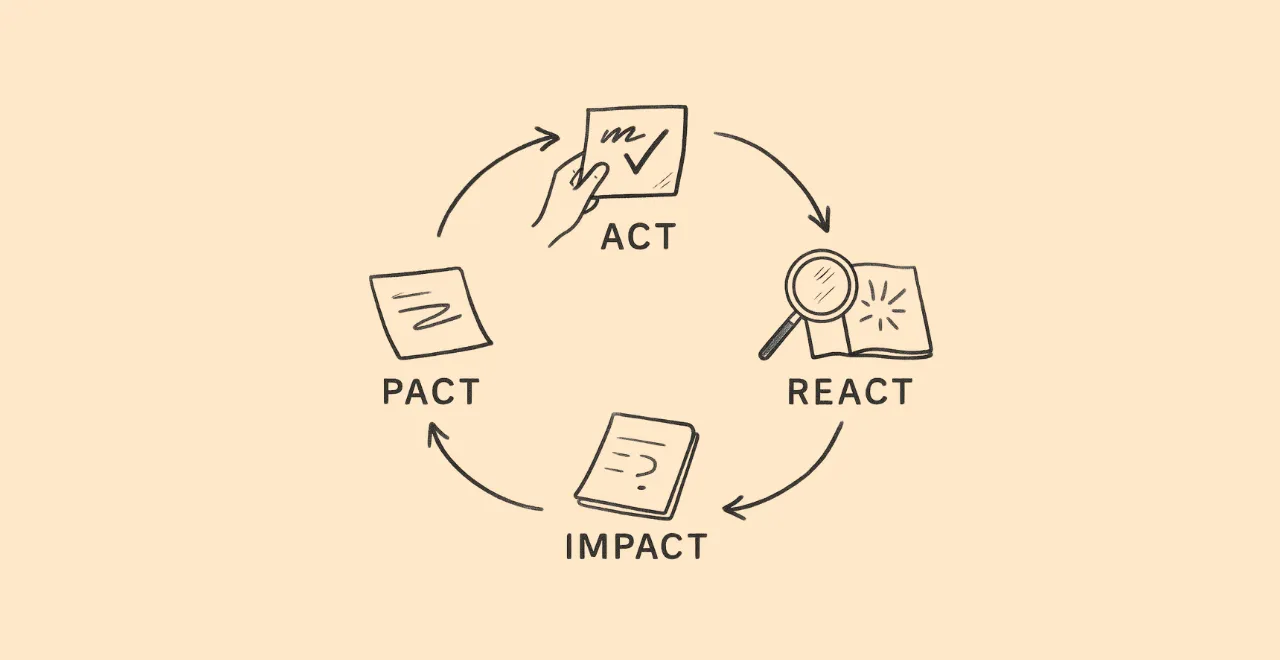
Personal growth doesn’t have to follow a rigid plan. In fact, systematically trying things out – what I call tiny experiments – can be far more sustainable and rewarding. Writing fits perfectly into this kind of experimental practice and can support you at every stage:
个人成长不必遵循僵化的计划。事实上,系统地尝试各种方法——我称之为 “微型实验” ——可能更可持续,也更有价值。写作非常适合这种实验性实践,并且可以为你的每个阶段提供支持:
1. PACT: Make a pact with yourself grounded in curiosity. You don’t need a detailed plan, just a simple commitment to explore something that feels alive: “I will [action] for [duration].” Writing it down, whether in a journal, a note to a friend, or a public post, gives form to your intention and creates a gentle incentive for showing up and completing the experiment.
1. 约定: 与自己立下基于好奇心的约定 。你不需要详细的计划,只需要一个简单的承诺,去探索一些让你感到鲜活的事物:“我将[行动]持续[时长]。”把它写下来,无论是写在日记里、给朋友的便条上,还是公开的帖子,都能让你的意图具象化,并为你坚持下去、完成实验提供一种温和的动力。
2. ACT: It’s easy to focus solely on execution and forget to capture what’s happening. Writing while you carry out your tiny experiment – such as capturing quick notes or logging thoughts as they emerge – can help you stay connected without the pressure to perform.
2. 行动: 很容易只专注于执行而忘记记录过程中发生的事情。在进行小型实验时进行写作——例如 快速记录笔记 或随时记录想法——可以帮助你在没有表现压力的情况下保持专注。
3. REACT: Once the experiment is complete, reflection is where learning happens. Writing helps you process the experience and make sense of what worked, what didn’t, and what you might want to try next (for example with the Plus Minus Next method).
3. 反思: 实验完成后,反思是学习发生的地方。写作可以帮助你处理经验,理解哪些方法有效,哪些无效,以及接下来你可能想尝试什么(例如使用 “加减下一步 ”方法)。
4. IMPACT: Over time, your tiny experiments might lead to something bigger. Whether you’re building a product, launching a project, or simply sharing what you’ve learned – writing helps you consolidate your insights and share them with others in a generative way.
4. 影响: 随着时间的推移,你最初的小小尝试可能会带来更大的成果。无论你是开发产品、启动项目,还是仅仅分享你的经验——写作都能帮助你巩固见解,并以一种富有启发性的方式与他人分享。
Writing helps you stay engaged, deepen your learning, and notice the invisible threads that tie your experiments together. It’s a low-cost, high-value companion for personal experimentation.
写作能帮助你保持专注,加深学习,并发现贯穿所有实验的无形线索。它是个人实验中低成本、高价值的得力助手。
It changed my life, and I think it can change yours too. So get a notebook, open a new document, or maybe even start a newsletter. Writing won’t do the growing for you, but it will support, shape, and accelerate your growth in countless ways.
它改变了我的人生,我相信它也能改变你的人生。所以,拿起笔记本,新建一个文档,或者甚至可以开始写电子报。写作本身并不能让你成长,但它会以无数种方式支持、塑造并加速你的成长。